July 28, 2026
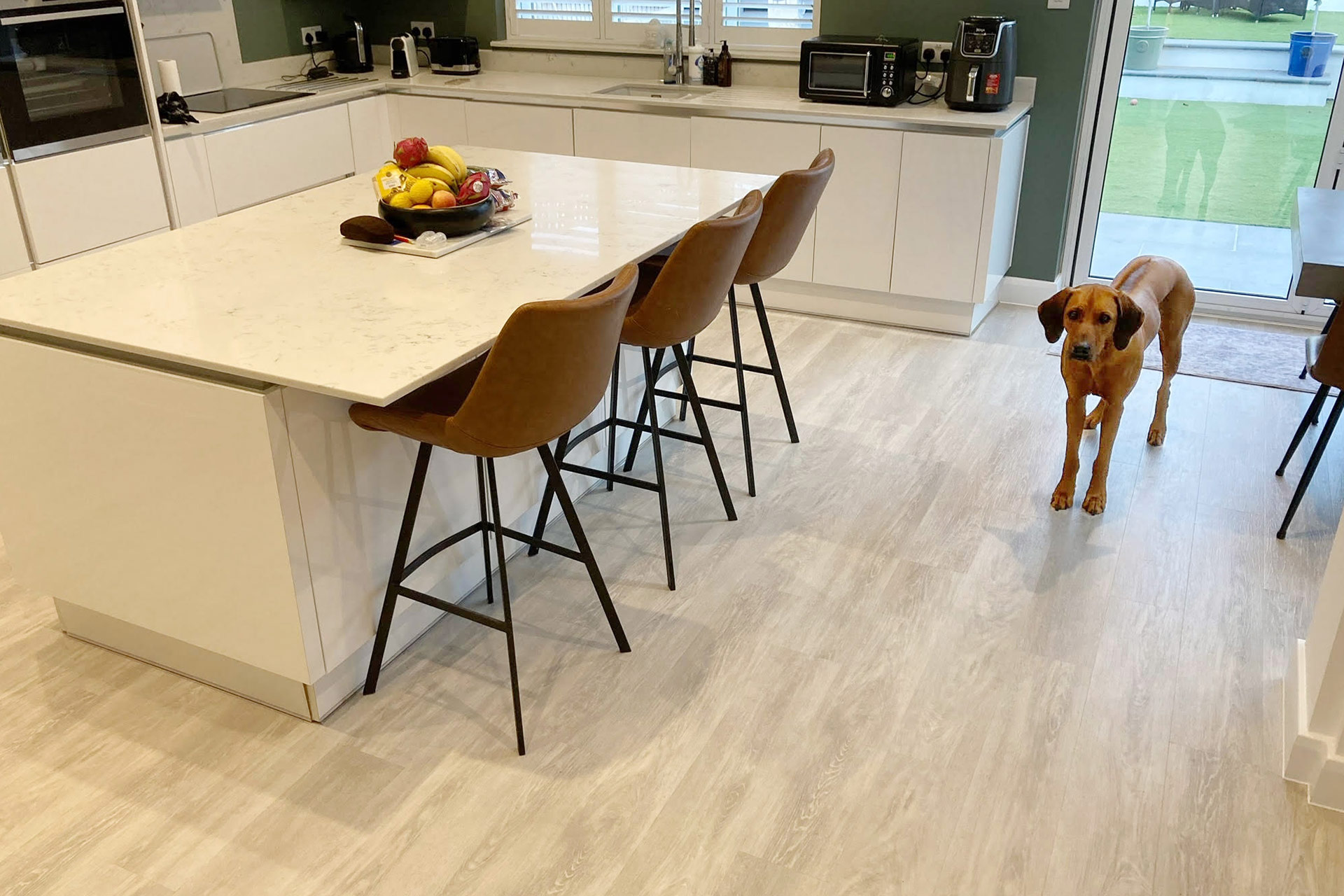
Dogs can be surprisingly hard on flooring. Muddy paws, claws, water bowls and the occasional sprint through the hallway all place extra demands on the surface beneath them. The good news is that you do not have to choose between practicality and appearance.
LVT, laminate, engineered wood and carpet can all work well in homes with dogs. The best choice depends on your dog, the room and how much maintenance you are comfortable with.
The main things to consider are:
No flooring is completely scratch-proof, so it is worth thinking about how the floor will cope with everyday wear rather than expecting it to stay perfect forever.
Luxury vinyl tile is one of the most practical flooring options for homes with dogs. It is durable, easy to clean and highly resistant to water, making it particularly useful in hallways, kitchens and open-plan living areas.
LVT also comes in a huge range of wood and stone effects, so choosing something practical does not mean compromising on appearance. Textured finishes can provide better grip, while natural-looking patterns can help disguise everyday marks.
LVT can still be scratched by grit or heavy furniture, so regular vacuuming and good entrance mats are important. For larger or more active dogs, a textured, mid-toned wood effect is often more forgiving than a very dark, smooth floor.
Laminate can also work well in homes with dogs, particularly in living rooms and bedrooms. It is easy to maintain, available in a wide range of wood effects and usually costs less than premium LVT.
The main consideration is moisture. Traditional laminate does not handle standing water as well as LVT, so wet paws and spills around water bowls should be cleaned up promptly. Water-resistant laminate products are available, but it is worth checking the specification of the individual floor rather than assuming they all perform in the same way.
If you are deciding between the two, our guide to LVT vs Laminate Flooring explains the differences in more detail.
Engineered wood can work very well in a home with dogs, but you need to be comfortable with some natural wear over time. Claws can leave marks, particularly on darker or very smooth floors, while brushed, textured and more varied boards tend to disguise small scratches better.
It is a good choice where the warmth and character of real timber are important, particularly in living rooms and dining rooms. An oiled finish can also make local repairs easier if the surface becomes marked. If every small scratch is going to annoy you, LVT may be the safer choice.
Carpet remains a strong option for bedrooms, living rooms and stairs. It gives dogs good grip, reduces the sound of claws and feels warmer and softer underfoot.
For homes with pets, a dense low or medium pile is usually easier to live with than a deep, loose pile that can trap more hair and dirt. Man-made carpet can be particularly practical in busy homes because many products offer good stain resistance and straightforward cleaning, while wool provides a more natural, premium feel but may need a little more care.
Our guide to Wool vs Man-Made Carpet looks at the differences in more detail.
For entrances and rooms leading directly outside, LVT is usually one of the easiest options to live with. The flooring itself is only part of the solution though, and a good entrance setup makes a big difference.
Small stones and grit carried indoors can gradually mark almost any flooring surface, so keeping entrances clean is one of the simplest ways to protect your floor.
Very dark floors often show pale hair, dust and fine scratches, while very light floors can make mud and darker hair more obvious. Mid-toned floors with natural variation are usually more forgiving.
Natural oak effects, warm mid-brown woods, textured finishes and stone designs with subtle colour variation can all work well. A simple test is to take a flooring sample home and place some of your dog's hair on it. It may not be glamorous, but it tells you far more than looking at a small sample in perfect showroom lighting.
Older dogs can sometimes struggle on very smooth hard flooring. If grip is a concern, look for textured finishes and consider using runners or non-slip mats in the areas your dog uses most, particularly in hallways, beside beds and around food and water bowls.
For many homes, LVT offers the best overall balance of durability, water resistance and easy cleaning. Laminate provides a more affordable hard-flooring option, while engineered wood gives you the natural character of real timber if you are comfortable with some gradual wear. Carpet remains hard to beat for warmth, quietness and grip.
There is no single floor that is right for every dog or every room. The best choice is the one that suits how your household actually lives.
Visit our Bromley showroom to compare dog-friendly flooring, explore full-size samples and get practical advice from our experienced team. We’ll help you choose the right flooring before arranging professional installation.


